

Ever wonder what’s really in your drinking water? You might be surprised! Testing your water at home is easier than you think, and it’s a smart way to protect your family’s health. Whether you get your water from the city or a private well, knowing what’s in it helps you choose the right water filtration system.
This guide explains different ways to test your water quality at home and what to do if you find unwanted stuff.
Why Should You Test Your Water? It’s About More Than Just Taste
Testing your water is important for several reasons:

How to Test Your Water: Three Easy Options

There are three main ways to test water quality at home:
1. Home Water Testing Kits: Quick and Easy Results
These kits are inexpensive and simple to use. They give you fast results for common problems like pH, chlorine, nitrates, water hardness, and lead.
2. Laboratory Testing: The Detailed Approach
For a really thorough check, you can send a water sample to a certified lab. This is more precise and can test for many different contaminants, including heavy metals, pesticides, and bacteria.


3. Professional Water Testing Services: Expert Help
If you want an expert to handle everything, you can hire a professional water testing service. They’ll come to your home, test the water, and explain the results clearly.
Understanding Your Water Test Results: What Do the Numbers Mean?
Here’s a simple guide to understanding common water test results:
Contaminant | Acceptable Level (MCL) | Potential Health Problems |
Microbial | ||
Coliform Bacteria | 0 total coliform/100 mL | Gastrointestinal illness, infections |
E. coli | 0 E. coli/100 mL | Severe gastrointestinal illness, kidney damage, death |
Cryptosporidium | (see note below) | Gastrointestinal illness (diarrhea, vomiting, etc.) |
Giardia lamblia | (see note below) | Gastrointestinal illness (diarrhea, cramps, etc.) |
Inorganic | ||
Arsenic | 10 µg/L (ppb) | Cancer (bladder, lung, skin), skin changes, circulatory problems |
Lead | Action Level: 15 µg/L (ppb) | Developmental problems in children, kidney damage, high blood pressure |
Nitrate | 10 mg/L (ppm) | “Blue baby syndrome” (methemoglobinemia) in infants |
Fluoride | 4 mg/L (ppm) | Skeletal fluorosis (in excessive amounts), tooth discoloration |
Organic | ||
Trihalomethanes (THMs) | 80 µg/L (ppb) | Potential link to cancer |
Haloacetic Acids (HAAs) | 60 µg/L (ppb) | Potential link to cancer |
PFAS (“Forever Chemicals”) | ||
PFOA | 4 ng/L (ppt) | Cancer (kidney, testicular), thyroid disorders, immune system effects, other health issues |
PFOS | 4 ng/L (ppt) | Cancer (liver), thyroid disorders, immune system effects, other health issues |
PFNA | 10 ng/L (ppt) | Similar to PFOA and PFOS, but with less extensive study |
PFHxS | 10 ng/L (ppt) | Similar to PFOA and PFOS, but with less extensive study |
HFPO-DA (GenX Chemicals) | 10 ng/L (ppt) | Similar to PFOA and PFOS, but with less extensive study |
PFBS | (part of a mixture) | Similar to PFOA and PFOS, but with less extensive study |
Radionuclides | ||
Radon | 4 pCi/L | Increased risk of lung cancer |
Contaminant | Acceptable Level | Potential Problems |
pH | 6.5–8.5 | Can cause corrosion, metallic taste. |
Chlorine | Less than 4.0 ppm | Eye/skin irritation, bad taste and odor. |
Lead | Zero | Can cause developmental problems, especially in children. |
Nitrates | Less than 10 mg/L (ppm) | Health risk for babies. |
Total Dissolved Solids (TDS) | 300–600 ppm | Bad taste, scale buildup in appliances. |
Notes:
Key Points about PFAS:
Where to find more information:
What to Do If You Find Contaminants: Taking Action for Clean Water
If your tests show high levels of contaminants, don’t worry! There are water filtration systems that can help. Here are some common options:
Conclusion: Clean Water is Within Reach
Testing your water is an important step in making sure your family has clean, safe drinking water. Regular testing and the right water filtration system can give you peace of mind and protect your health. Don’t wait – test your water today!
FAQs for In-Home Water Testing
Additional information you need to know about testing your tap water for contactaminations
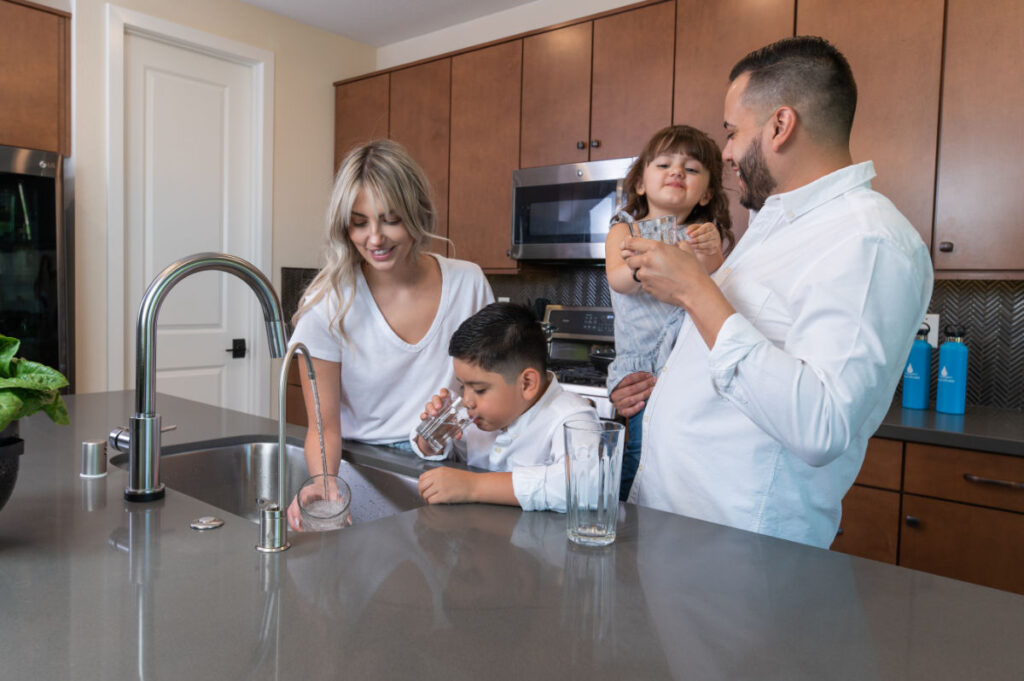
Ready for Cleaner, Better‑Tasting Water?
Protect your health with a filtration system that meets real performance standards. Multipure’s solid carbon block filters are NSF‑certified to reduce contaminants that affect taste, smell, and safety.


