We all know clean water is essential, but what about the water we use to shower? While we often focus on drinking water, the water we bathe in can also significantly impact our health. One common chemical found in shower water is chlorine, and while it’s used to kill bacteria, it can also have some surprising side effects. Let’s dive into the potential risks of chlorine in your shower and what you can do about it.
Chlorine: Friend or Foe?
Chlorine is a powerful disinfectant added to municipal water supplies to eliminate harmful bacteria and other microorganisms. It’s a crucial step in ensuring our water is safe to drink. However, the chlorine in your shower water can evaporate and become a gas, which you then inhale. This is where some of the problems can arise.
The Effects of Chlorine on Your Body
Showering in chlorinated water can lead to a range of issues, including:
Dry, Itchy Skin: Chlorine can strip your skin of its natural oils, leading to dryness, itching, and irritation. This can be especially problematic for people with sensitive skin conditions like eczema or psoriasis.
Brittle Hair: Just like it affects your skin, chlorine can also dry out your hair, making it brittle, dull, and prone to breakage. It can also fade color-treated hair faster.
Respiratory Problems: When chlorine evaporates in the shower, you can inhale it. This can irritate your respiratory system, potentially triggering asthma symptoms or other breathing difficulties, especially with prolonged exposure. Think of it like a mini-pool in your bathroom, and we know how strong pool chlorine smells.
Eye Irritation: Chlorine can also irritate your eyes, causing redness, burning, and dryness. This is especially true if you open your eyes underwater.
Long-Term Health Concerns: Some studies suggest that long-term exposure to chlorine and disinfection by-products (DBPs), which form when chlorine reacts with organic matter in water, may be linked to an increased risk of certain cancers. While more research is needed, it’s a concern worth considering.
Who is Most at Risk?
Certain groups of people may be more vulnerable to the effects of chlorine in shower water:
Children: Children’s skin and respiratory systems are still developing, making them more susceptible to the harmful effects of chlorine.
People with Sensitive Skin: Individuals with eczema, psoriasis, or other skin conditions may experience more severe irritation from chlorine.
Asthmatics: Chlorine vapors can trigger asthma attacks and worsen respiratory symptoms.
What Can You Do?
If you’re concerned about the effects of chlorine in your shower water, here are some steps you can take:
Shower Filter: Installing a shower filter is a great way to reduce chlorine levels in your shower water. These filters are relatively easy to install and can significantly improve water quality.
Reduce Shower Time: Shorter showers mean less exposure to chlorine vapors. Try to limit your shower time to 10 minutes or less.
Improve Ventilation: Make sure your bathroom is well-ventilated to reduce the concentration of chlorine gas in the air. Run the exhaust fan during and after your shower.
Lower Water Temperature: Hot water releases more chlorine gas than cooler water. Taking cooler showers can help reduce your exposure.
Test Your Water: You can test your tap water for chlorine levels to get a better understanding of your exposure.
Making Informed Choices
While chlorine plays an important role in disinfecting our water, it’s also important to be aware of the potential risks associated with showering in chlorinated water. By taking some simple steps, you can minimize your exposure to chlorine and protect your health. Consider a shower filter, shorten your shower time, and make sure your bathroom is well-ventilated. These small changes can make a big difference.
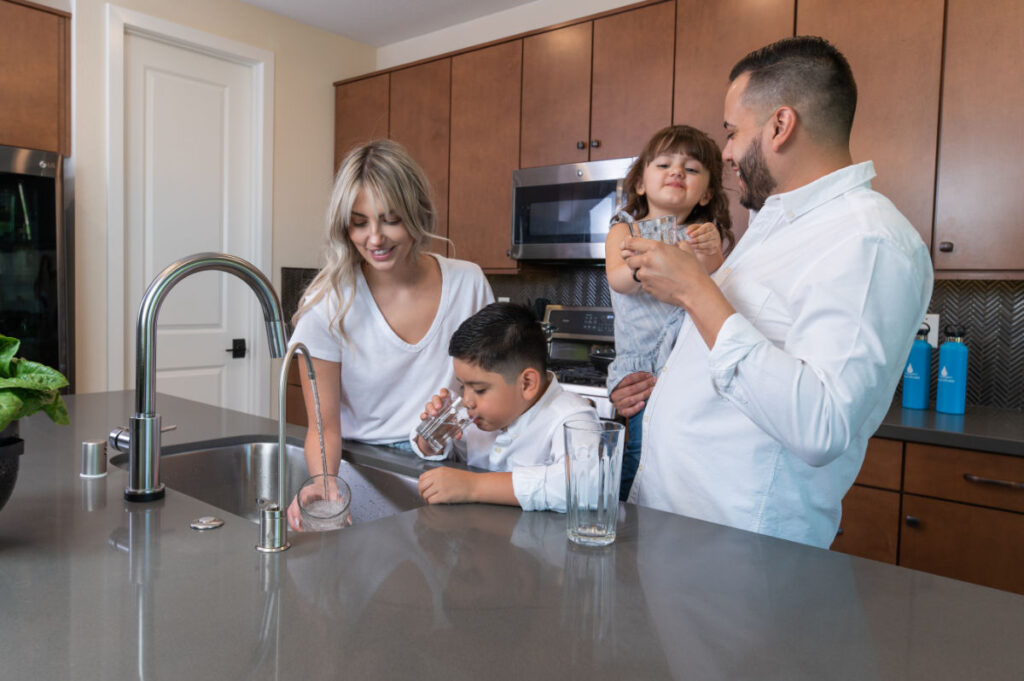
This family is enjoying the benefits of filtered water from a Multipure (solid carbon block) undersink water filter. The filter highly effective in reducing harmful contaminants from your water, ensuring your family has access to cleaner and healthier drinking water-24/7.
Ready for Cleaner, Better‑Tasting Water?
Protect your health with a filtration system that meets real performance standards. Multipure’s solid carbon block filters are NSF‑certified to reduce contaminants that affect taste, smell, and safety.
Learn How to Test Your Water, Choose a Water Filter System, and Get the Best Drinking Water for Your Home What Water Filter System Do I Need? In Part 1 of this series, we explained why your water might taste bad and why boiling water is not enough. Then in Part 2, we looked at the most common water purification…
Comparing Topmost Whole House Waters and Multipure Aquasource Clean, safe water is a necessity for every household. When considering a whole house water filter system, homeowners often compare installation cost, performance, and maintenance before making a decision. Multipure is one of the most respected names in water filtration, but how does it stack up against other topmost brands like Aquasana,…
“Filtered water tastes bland.” It’s a common complaint, and it might be holding you back from enjoying truly clean, healthy water. But is it true? Let’s dive into this myth and discover how to make your filtered water taste fantastic! Why the “Bland” Myth Exists: Understanding Water Filtration and Taste Some water filtration systems, particularly reverse osmosis (RO) systems,…
Why Switch to Filtered Water? Unlocking the Benefits of Clean Drinking Water Making small changes can have a big impact on your health and well-being. Switching to filtered water is one of the easiest and most effective ways to improve your quality of life. Are you ready to experience the difference that clean water can make? Beyond Taste and…
Welcome to Pure Water Filtration Blog: Your Journey to Cleaner, Healthier Water Starts Here Introduction Water is essential to life, yet many people overlook its quality. Tap water can contain contaminants like chlorine, lead, and microplastics, impacting your health. Studies have shown that exposure to these contaminants over time can lead to serious health issues,…
Ever wonder what’s really in your drinking water? You might be surprised! Testing your water at home is easier than you think, and it’s a smart way to protect your family’s health. Whether you get your water from the city or a private well, knowing what’s in it helps you choose the right water filtration system. This guide…